



Alias Wayne New Single ‘Tribute’

Alias Wayne has always sounded most convincing when he resists the temptation to make his songs bigger than they need to be. His latest single, “Tribute,” fits naturally into that artistic world, leaning toward patient songwriting, acoustic textures, understated rhythms and a weathered vocal presence that favors character over polish. This approach defined much of 2026’s Paradigm Shift, a record built around reflection, connection and the kind of quietly evolving perspective that rarely announces itself.
Rather than approaching its subject with excessive sentimentality, the song feels rooted in the qualities that have become Alias Wayne’s strongest assets: sincerity, restraint and an almost conversational relationship with the listener. There is something refreshingly unfashionable about Wayne’s music. He isn’t chasing the hyper-compressed immediacy of contemporary pop, and his songs tend to unfold at their own pace, allowing melodies and ideas to settle.
Perhaps Wayne’s greatest strength remains his voice. It isn’t the pristine, technically flawless instrument around which modern pop singles are normally constructed.
Instead, he has a weathered quality to his delivery that gives the material credibility, especially on romantic numbers like this one. Paired with an organic blend of acoustic and electric instrumentation, the performance feels closer to somebody telling you something across a table than somebody singing from a stage.
STREAMING:
That intimacy is where “Tribute” makes the strongest impression. Wayne understands that emotional weight does not necessarily require musical weight. The most affecting moments come when he leaves enough space around an idea for the listener to complete the emotional picture themselves. The intentionally light production leans further into that idea of creating space, placing the vocal performance front and centre amidst a toned-down arrangement.
ONLINE:
https://www.ranzelxkendrick.com/
https://www.instagram.com/ranzelxkendrick/
https://www.facebook.com/RanzelXKendrick
https://www.youtube.com/@AliasWayne
What continues to separate Alias Wayne from many singer-songwriters operating in the same space is his willingness to leave the rough edges intact. “Tribute” understands the value of understatement, especially when communicating affection and memory. Within the increasingly introspective direction of his recent work, “Tribute” feels like another quietly personal statement from an artist who has become particularly good at recognizing when a song needs embellishment, and when it simply needs room to breathe.
STEPHEN MUGFORD New Single ‘FUZZY SOCKS (NA NA NA)’

There is something wonderfully disarming about Stephen Mugford’s latest single, “Fuzzy Socks (Na Na Na).” Despite the title, Mugford tackles questions as large as anxiety, mortality and the meaning of life, wrapping some surprisingly weighty ideas inside an irresistibly warm slice of piano-led singer-songwriter pop.
Released on September 25, the track offers another preview of Mugford’s forthcoming second album, Letters Never Sent, expected in early 2027. Produced by John Escobar with arrangements from Emmy- and Grammy-winning guitarist Claudio Ragazzi, the song continues Mugford’s fondness for the melodic storytelling and musicianship of the ’70s and ’80s while drawing touches of funk and jazz into the arrangement.
Musically, “Fuzzy Socks” immediately evokes the classic piano-man tradition. There is a little Billy Joel in the buoyancy of its chords and conversational storytelling, alongside some of the easygoing humanism associated with James Taylor and Paul Simon. But while the inspiration is clear, Mugford never sounds like he is merely recreating another era. The production is polished and spacious, allowing the piano, rhythm section and subtly sophisticated harmonic movement to carry the song.
Listen: https://stephenmugford.ffm.to/fuzzy-socks-na-na-na
Instagram: http://instagram.com/stephenmugfordmusic
Facebook: http://facebook.com/stephenmugfordmusic
Linktree: http://linktr.ee/stephenmugfordmusic
There’s also more going on lyrically than the playful title initially suggests. Mugford structures the song almost like three snapshots from different stages of a lifetime. One follows someone searching for definitive answers about existence, another explores childhood fear and the security found in small comforts, while the final section looks toward mortality itself. Rather than supplying some grand revelation, each story gradually arrives at essentially the same idea: perhaps life becomes easier to understand when we stop demanding an explanation from every part of it.
– https://skopemag.com/2026/09/27/stephen-mugford-shares-joyous-sing-along-anthem-fuzzy-socks-na-na-na
That is where the whole point of that “na na na” refrain becomes clear. After verses filled with questions, reflection and uncertainty, language itself effectively gives way to melody. You don’t need to have solved existence to participate; sometimes singing along is enough. Mugford’s vocal delivery suits that philosophy perfectly. He sounds conversational and approachable, like someone sharing an observation he just arrived at rather than preaching a lesson.
With “Fuzzy Socks” Stephen Mugford manages the unusual feat of writing a song about the meaning of life that ultimately suggests we might be better off thinking about it a little less. It is thoughtful without becoming solemn, and sentimental without losing its sense of humour.
‘Artificial World’ by recording artist Deborah

There is something deliciously contradictory about Deborah’s “Artificial World.” It is bright, polished and built to move bodies, yet underneath that glossy dance-pop exterior is a song questioning our obsession with polishing ourselves into increasingly unnatural versions of who we are. That tension, together with the almost whimsical delivery and lyrics, is precisely what makes the single work.
“Artificial World” approaches modern beauty culture through a satirical lens, taking aim at the increasingly bizarre lengths people go to in pursuit of youth, perfection and externally imposed standards of attractiveness. Right out of the gates, she critiques facial work, creating humour by referring to eyes frozen in place and a smile resembling the Joker from Batman.
But as the song progresses, the underlying argument becomes increasingly uncomfortable. That sense contrasts even more sharply with the contemporary dance-pop instrumentation, driven by punchy electro-pop keyboards, a crisp rhythmic foundation and guitar parts that inject a welcome edge into the arrangement. The guitar solo in the bridge is a nice touch as it adds some grit and movement around the electronic elements rather than allowing the song to disappear entirely into programmed pop production.
You can listen and watch the song here: https://www.deborahmannas.com/for-your-consideration
The production itself embraces polish without becoming sterile. Its tightly controlled rhythm section gives the track the momentum required for dance-pop and radio playlists, while layered vocal harmonies broaden the choruses and add another level of pop immediacy. Michael Fogarty’s production collaboration understands that a message-driven song does not necessarily have to sound serious. The glossy presentation actually strengthens Deborah’s argument: all that musical shine becomes part of the joke.
The lyrics need expression because much of their appeal lies in their wit. Deborah isn’t simply declaring that beauty standards are harmful; she is observing the absurdity of a culture in which increasingly extreme interventions can become ordinary. There is an almost theatrical quality to the concept, as though the singer is standing slightly outside the madness and inviting us to look at ourselves for a moment.
Deborah has long approached songwriting as a means of discussing human behaviour and social questions, and this single continues that impulse without sacrificing fun. “Artificial World” is something of a Trojan horse: an energetic, quirky pop record carrying a pointed observation about insecurity, ageing and the strange things modern culture teaches us to consider normal.
About the artist
Deborah is a published poet, social advocate, and HR leader with over 15 years in senior roles across Asia, Deborah brings the same rigour and humanity to her music as she does to every area of her life. She works with the Kely Support Group, Kids4Kids, The Women’s Foundation, and Community Business — and founded I’m More Than A Cover, a magazine empowering girls and young women.
Artist Website: https://www.deborahmannas.com/
Kenny Foster Presents ‘All Right Then’
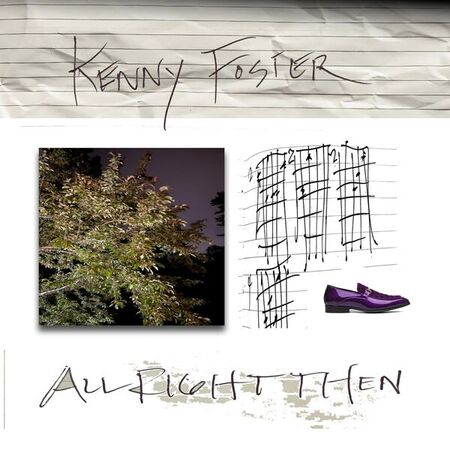
Kenny Foster delivers an enticing single that draws the listener in from the opening note with his latest release, “All Right Then.” Rather than demand attention outright, the track begins with a noticeably laid-back feel before gradually developing its momentum. The highlights are its easygoing melody, an expressive vocal performance, and a generally uncluttered approach that allows Foster’s personality to remain at the center of the recording.
There is an appealing casualness to the track. Foster does not appear interested in forcing a dramatic moment simply for the sake of one. Instead, “All Right Then” works through its relaxed progression. The opening establishes the song’s comfortable atmosphere, while the arrangement gains energy as it moves forward. That gradual development prevents the track from feeling static without sacrificing the looseness that gives it much of its charm.
STREAMING:
https://open.spotify.com/track/0BmYbHCwDHWZWoRtG7Qnnv?si=ead06149942240f1
VIDEO:
https://youtu.be/U_xvo29TgZk?si=Q7KQun_tcW7iI8d2
Foster’s vocal delivery is arguably the strongest part of the presentation. There is a conversational quality to it that suits the song’s understated character, but enough personality comes through to keep the performance from becoming anonymous. Foster gently croons throughout the track, demonstrating that he doesn’t need theatricality to communicate.
Melodically, the single also understands the value of simplicity. Its accessible, catchy writing gives it immediate appeal, but the song never feels as though it is straining for a massive pop chorus. Instead, the melodies complement the relaxed atmosphere established at the beginning. The track is pleasant without becoming disposable, and polished without losing its sense of individuality.
If there is a limitation, it is that the same restraint that makes “All Right Then” appealing can also prevent it from becoming truly explosive. There’s no beat drop or cathartic release, and the pleasure is solely in the flow of the track and the personality of the performance.
With “All Right Then” Foster builds an argument for ease over excess. Its relaxed beginning, growing momentum and personable vocal delivery give it an inviting character, while its accessible melodic writing makes it easy to revisit. Foster sounds comfortable allowing a good melody and a distinctive performance to carry the song, resulting in a warm, uncomplicated pop release that quietly makes its case.
ONLINE:
https://linktr.ee/kennyfoster
https://www.facebook.com/kenneth.n.forrester
https://www.instagram.com/kenneth.n.forrester
ANDIE CASE NEW SINGLE “SPEAK OF THE DEVIL”
Andie Case has never had much trouble commanding attention with her voice, but her new single “Speak of the Devil” ventures into completely new thematic territory for her. It’s provocative, emotionally messy and noticeably less interested in presenting its narrator as the sensible one. Case has been moving beyond the massive cover-song audience that initially made her famous and this track is a huge step in establishing a musical identity that belongs entirely to her.
Released as part of Case’s new six-track EP Show Me Yours, I’ll Show You Mine, “Speak of the Devil” runs a compact 3:11 and follows 2026 singles “Better Days” and “Loser.” While the earlier releases dealt with tamer subject matter, this new track turns toward attraction, temptation and the uncomfortable knowledge that wanting somebody does not necessarily mean that person is good for you.
Stream:
That conflict is what gives the song its personality. The “devil” here is the decision you already know you should stay away from. Desire and self-preservation are pulling in opposite directions, and Case does not rush to resolve the contradiction. There is a conversational quality to “Speak of the Devil” that lets Case sell the situation masterfully. The attraction, hesitation and thrill of realizing that common sense may be about to lose the argument shine through on both the lyrics and the delivery.
Case’s vocal presence is naturally the focus, but she’s moved to a stage where vocal power no longer feels like the entire point. “Speak of the Devil” is conceptually refreshing in the sense that it doesn’t need to turn its emotional predicament into a grand life lesson. Pop songs about destructive attraction are hardly new territory, and Case gives it weight through the lack of emotional distance.
– https://skopemag.com/2026/09/25/andie-case-turns-up-the-heat-on-new-single-speak-of-the-devil
“Speak of the Devil” is another convincing step in Andie Case’s transformation from celebrated interpreter into increasingly self-defined songwriter. It is compact, seductive and emotionally unresolved in exactly the way its subject demands. More importantly, it suggests that Case is becoming comfortable letting her original music contain contradictions. There’s confidence alongside vulnerability, attraction alongside regret, and the knowledge that sometimes seeing the red flag does absolutely nothing to stop you walking toward it.
FOLLOW ANDIE CASE:
Instagram | Spotify | TikTok
intimate dream New Album ‘Mine Alone’

There is something appealingly unfashionable about intimate dream’s latest album, “Mine Alone.” Rather than chasing contemporary production trends, the album draws from classic rock, old-school pop and alt-rock, using those familiar sounds to frame songs about love, loneliness, memory and the difficult process of letting things go.
Across ten tracks, songwriter Hugh Faulds and his collaborators move between romantic yearning and much darker emotional territory, ultimately shaping an album that feels like a journey through different stages of attachment and loss. It begins with the title track, “Mine Alone,” which is built around intimacy stripped of secrecy: two people revealing everything they know and imagining a moment in which nothing remains between them.
TRACKS
1. Mine Alone
2. Dark Clouds
3. (Now I Wanna Be A) Space Girl
4. Won’t Forget
5. We Never Said Goodbye
6. In Your Head
7. Wonderful Thing
8. Find Love
9. Slow Down
10. Raise Your Hand
Engineering, Producing and Mastering by Todd Fitzgerald and Brian Johnson at Winterland Recording Studios & The Terrarium Recording Studios.
Musically, the opener gradually develops from sensitive balladry into something more impassioned, driven by expressive guitar. Underneath the softness is considerable emotional pressure waiting to break through, and that pressure transforms into “Dark Clouds.” Here love is no longer comforting. The narrator is isolated, humiliated and unable to escape his own thoughts, moving between begging for affection and admitting that the clouds inside his head will not disappear.
That directness runs throughout Mine Alone as “Won’t Forget” transforms separation into remembrance, insisting that the best moments of a relationship remain even after the people involved have moved apart. The album keeps circling the same basic need of human connection with each iteration while showing how differently that need can manifest itself.
VIDEO FOR “MINE ALONE”:
https://youtu.be/sK0IKPx35MQ?si=gIYPSvPJesEestCX
VIDEO FOR “WE NEVER SAID GOODBYE”:
https://youtu.be/disdHuOki6k?si=w77iTDiVlrP38P4V
Few moments communicate loss as efficiently as “We Never Said Goodbye.” The imagery of stars, sky, sunlight and clouds is almost elementary, but that simplicity makes the absence at its centre more affecting. The crucial detail is that there was no proper farewell. “We never said goodbye” becomes an unresolved thought the narrator cannot stop revisiting.
That restraint is significant because Mine Alone works best when it avoids over complicating its emotions. The minimalist production suits Intimate Dream’s musical identity as the arrangements tend to foreground songs and performances rather than studio spectacle. That’s most evident as the emotional destination arrives with “Raise Your Hand.” After so many songs devoted to holding on, the closing track finally asks the listener to release something.
Mine Alone ultimately succeeds through sincerity. Intimate Dream is not attempting to disguise its influences or reinvent rock music. Instead, Faulds and company use melodic guitars, classic-rock structures, bluesy detours, vocal arrangements and flashes of vintage rock ’n’ roll to support songs that speak in deliberately uncomplicated emotional language. For an album so preoccupied with holding onto people, Mine Alone ends by recognising something equally important: sometimes survival begins with learning what to release.
Jude Gwynaire Presents New Single ‘Siren Hearted Girl’

Jude Gwynaire has always seemed happiest operating somewhere beyond the neat borders of genre. His new single, “Siren Hearted Girl,” continues that trend and finds him turning his attention more deliberately toward the rock song. With a catalogue already spanning electronica, jazz, New Age and experimental soundscapes, the UK musician and composer continues building his identity around following ideas wherever they happen to lead.
The track arrives during an interesting transitional period for Gwynaire. Much of his catalogue has traditionally been instrumental, but his forthcoming album, After Meeting on King’s Road, is set to place a greater emphasis on songs and vocals. Earlier single “Saint Magdalene and Me” signaled that shift with its acoustic, soft-rock character, while the album’s recently released title track moved further toward rock with psychedelic touches.
From the opening notes, “Siren Hearted Girl” has the kind of soundscape Gwynaire enjoys building songs around: romantic, slightly surreal and suggestive enough to leave space for the listener’s imagination. That instinct has been present throughout his work, where women, landscapes, mythology and unusual places frequently become starting points for miniature musical worlds.
What sets this track apart is the rock instrumentation. Powerful electric guitar licks pile on top of the distortion, becoming the defining point of the entire song. The production offsets the hard rock character though, as there’s a shimmering quality to the high notes that softens the impact throughout the song.
That makes “Siren Hearted Girl” particularly representative of where Jude Gwynaire seems to be heading in 2026. He is not abandoning the eclecticism of his earlier work and remains a home-studio composer fascinated by atmosphere, strange imagery and stylistic collisions.
“Siren Hearted Girl” marks a change in direction for Gwynaire. It carries his familiar sense of fantasy and mystery, while the guitar-led rock framework places the emphasis increasingly on direct songwriting. For an artist who has spent years moving freely between musical worlds, that combination may be precisely the point. Jude Gwynaire is becoming more of a songwriter without becoming any less himself.
Deepwise New Single “Keep on Dragging Me Down”
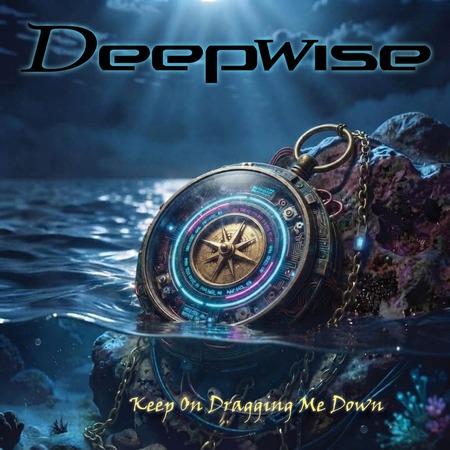
Las Vegas hip-hop artist Deepwise makes a powerful statement with his latest single, “Keep on Dragging Me Down.” Built around the exhausting experience of being held back by the people around you, Deepwise transforms that frustration into something unexpectedly measured. Released on September 18, 2026, the 3:27 track blends introspective songwriting with a relaxed, atmospheric sound that draws from old-school hip-hop, jazz, R&B and the hazier edges of cloud phonk.
At its heart, “Keep on Dragging Me Down” deals with a familiar but uncomfortable realization: sometimes your ambitions are just too big for your companions. the people you are trying hardest to help are the same people preventing you from moving forward. Deepwise has described the song as stemming from his own experiences of helping others only to feel them pulling him back, connecting the idea to the familiar “crabs-in-a-bucket” mentality.
The great thing about this record is that it never feels like an accusation. Instead, the emotional arc is about recognizing unhealthy relationships, establishing boundaries and choosing progress over resentment. Choosing reflection over aggression is a bold choice in a musical landscape where rage sells, but Deepwise realises that authenticity resonates with audiences much better. The song feels as if it comes from someone who has already spent enough time fighting the same battle of pushing forward while carrying other people’s burdens.
– https://skopemag.com/2026/09/16/deepwise-breaks-free-on-new-single-keep-on-dragging-me-down
Musically, the production gives those ideas plenty of room. Deepwise originally drew inspiration from the hazy world of chill and cloud phonk, but the finished track reaches beyond those reference points. Jazz-inflected instrumentation, piano and guitar soften the electronic backdrop while maintaining a solid hip-hop foundation. The result is atmospheric without becoming sleepy, and nostalgic without sounding deliberately retro.
There is also an appealing warmth to the track. Where much contemporary atmospheric hip-hop can bury the performer beneath layers of production, “Keep on Dragging Me Down” keeps Deepwise firmly at the center. His rap delivery is clear and conversational, while the sung hook adds another dimension to his performance.
“Keep on Dragging Me Down” succeeds because Deepwise refuses to let a song about being dragged backward become consumed by negativity. The frustration is present, but so is perspective. Wrapped in warm jazz textures, hazy production and an engaging mixture of rapping and melody, the track turns disappointment into a quiet declaration of independence.
FOLLOW DEEPWISE:
Clapper | Apple Music | Instagram | TikTok | Spotify | YouTube
Bongo Boy Records Presents ‘Gar Francis Songbook, Vol. Two’
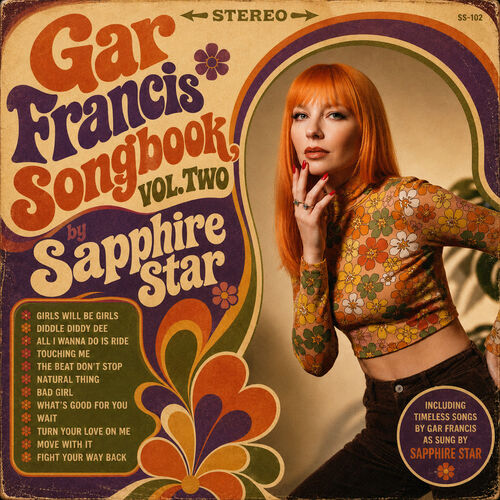
With “Gar Francis Songbook, Vol. Two,” Bongo Boy Records reaches into the archives of songwriter Gar Francis and finds much more than a collection of forgotten songs. Performed through their Sapphire Star project, the album is a lively celebration of classic American R&B, soul, garage rock and pop: music that looks backwards for inspiration without feeling entirely trapped there.
produced by Monique Grimme, the 12-track album is built around songs written and arranged by Francis, several of which had existed for years primarily as demos or unreleased material. The opening track, “Girls Will Be Girls,” establishes the album’s vintage character immediately. Its doo-wop and early-’60s soul influences are paired with bright brass and prominent vocal hooks, recalling the era when girl groups, Motown and rhythm-and-blues singles dominated radio.
Streaming link: https://linkmysong.com/87985
Yet Gar Francis Songbook, Vol. Two rarely settles for straightforward revivalism. The production gives these older songwriting instincts a cleaner contemporary frame, which is evident on “All I Wanna Do Is Ride.” The track leans toward rowdy, horn-driven rhythm and blues, but carries a modern sheen that sets it apart from classic Motown dance records. There is an uncomplicated pleasure running through these songs: big rhythms, memorable choruses and arrangements designed to move.
SONG TITLES
1. Girls Will Be Girls 3:24
2. Diddle Diddy Dee 3:06
3. All I Wanna Do Is Ride 4:10
4. Touching Me 4:10
5. The Beat Don’t Stop 3:22
6. Natural Thing 3:40
7. Bad Girl 3:21
8. What’s Good for You 4:21
9. Wait 2:54
10. Turn Your Love on Me 3:50
11. Move With It 3:10
12. Fight Your Way Back 3:37
One of its most interesting moments is “Natural Thing.” Here, the vintage foundation begins crossing more visibly into modern soul and pop. Saxophone accents sit alongside touches of rock guitar, giving the song a slightly broader musical vocabulary. The album also knows when to ease off the accelerator. “What’s Good for You” provides a more measured contrast to the louder R&B material, with the arrangement drawing on Hammond-organ textures and gospel-influenced harmonies. It’s a nice shift from the album’s devotion to high-energy retro soul.
Gar Francis Songbook, Vol. Two works because its attention remains on the songs. Beneath the production choices and the project’s archival concept are melodies, grooves and hooks written in a tradition where a song had to stand on its own. For listeners who still value strong hooks, classic R&B energy and songwriting shaped by the traditions of rock ‘n’ roll, there is plenty here to enjoy.
New Album By Gwen – ‘A Cure That Will Save the Both of Us’

There is something wonderfully restless about Gwen’s debut album, “A Cure That Will Save the Both of Us.” The Manhattan band has no interest in playing it safe and stretches their first full-length into an hour-long, deliberately cinematic experience where art-rock, electronic production and melodic songwriting constantly bleed into one another. The band describes the record as a journey through memories and through the different “cures” people convince themselves will save them.
The album opens with “The High,” an instrumental number with gentle washed-out guitars setting the atmosphere before the record moves deeper into its recollections.
STREAMING:
https://open.spotify.com/album/0f7Xu5dvzph8HJjjasFpYC?si=hrDx9eUjQzWBwuMyeChx2g
VIDEO FOR “CIGARETTE”:
https://www.youtube.com/watch?v=YcaS-MK7ds4
VIDEO FOR “ATHENA”:
https://youtu.be/E-oim1_ztG4?si=JLW4rdjBnpKXL17L
“Keep Me Alive” arrives shortly afterwards as a counterweight, exploring themes of mental illness and medication. “Cigarette” follows with equal emotional weight, and an incredible vocal performance filled with anguish.
TRACKS
1. The High
2. Five Miles West
3. Keep Me Alive
4. Cigarette
5. Cryogenic Chamber
6. Interlude
7. Cross
8. Athena
9. Love Is Torture
10. Helmet Song Pt. I
11. Helmet Song Pt. II
12. The Low
But it is the album’s second half that most strongly establishes Gwen’s ambitions. The band explores a variety of rock styles on “Athena,” absolutely justifying the track’s runtime of nearly nine minutes. Nearly the entire spirit of the record is captured in this track as Gwen increasingly allows atmosphere, electronics and guitar noise to compete with conventional songcraft.
The album comes full circle, starting with “The High” and ending on “The Low,” which pulls the listener out of the dream and back toward a harsher reality. The existential dread of the lyrics is matched by the muted instrumentation as the band opts for a purely acoustic arrangement. Even without turning the album into a literal narrative, the movement from high to low suggests that whatever salvation Gwen is searching for across these songs is temporary.
The excess of A Cure That Will Save the Both of Us is where some listeners may struggle. But what Gwen has produced is an unusually assured statement of intent. The album is an entire world of emotion: nostalgic, unsettled, melodic one moment and engulfed in noise the next. Its fascination with imagined cures is all about documenting why people keep looking for a way to fix themselves. By the time “The Low” arrives and the dream breaks, Gwen has made that search feel messy, intimate and recognizably human.
ONLINE:
https://linktr.ee/GwenBand
https://www.instagram.com/gwenbandofficial
https://www.youtube.com/@gwenband?si=tgx9s_fb0HFwLfJe
https://gwenband.bandcamp.com/album/a-cure-that-will-save-the-both-of-us
Erik Hansen New Album ‘The Eternal Conflict’
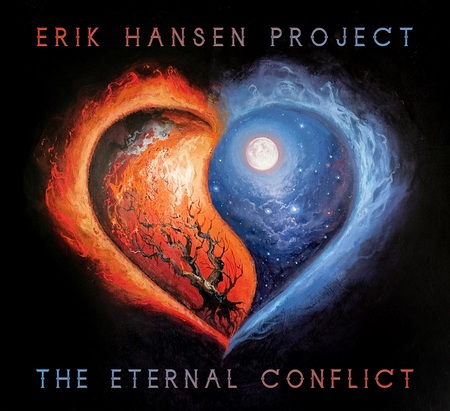
Seattle rocker Erik Hansen makes an emphatic leap as a full-length storyteller with his debut album, “The Eternal Conflict.” a muscular, melody-driven collection, this record looks backward at rock’s golden eras without sounding trapped inside them. The twelve-track record brings together drummer Kip Rondorf, bassist Carl Larsson and guitarist Robbie Houston, surrounding Hansen with a band capable of matching the album’s shifts between classic hard rock, alternative grit and more reflective melodic passages.
“Far Away” announces the album’s intentions immediately. Its thick guitar attack, forceful rhythm section and catchy vocal hooks establish the album’s hard-rock foundation without wasting much time on atmosphere-building. The track races forward with the confidence of an opener designed for a live room, but Hansen pays equal attention to structure, using changes in dynamics, vocal harmonies and a late bridge to prevent the song from becoming a straightforward riff exercise.
STREAMING:
https://open.spotify.com/album/3jmfP38HEVjEfLYGjIpogl?si=_GATh91rR9iJXAimE-Bc_A
VIDEO FOR “PIECES OF YESTERDAY”:
https://youtu.be/WFgTqIfgUuM?si=Rz-k9vnY7Jsu6OPO
“Pieces of Yesterday” begins widening the record’s palette before “Celestial” takes it into darker territory. The latter is one of the clearest meeting points between Hansen’s classic-metal background and the shadowier side of Seattle rock, leaning into ominous tones that recall the likes of Black Sabbath and Soundgarden.
The most interesting moments arise when Hansen allows the record to become moodier. “Dreaming in the Dark” carries an atmospheric weight that contrasts nicely with the album’s more immediate rockers, while “Lost and Lonely” adds another layer of emotional unease. “Seasons” pushes still further into slow-burning alternative rock, as the second half of the album keeps repositioning its emotional center.
TRACKS
01. Far Away
02. Pieces of Yesterday
03. Celestial
04. Holding Out an On
05. Fight to Live
06. In Your Eyes
07. She Dances
08. Dreaming in the Dark
09. Lost and Lonely
10. More to Say
11. Seasons
12. Shine
By the time the pop-punk colors of “Shine” brings the record to its conclusion, The Eternal Conflict has travelled through several decades’ worth of rock language without losing its central identity. The title, The Eternal Conflict, feels increasingly appropriate: heaviness sits beside melody, optimism beside isolation, and polished classic-rock craft beside something rougher and more contemporary.
The Eternal Conflict is all about proving how much life remains inside the familiar building blocks of rock music. Heavy riffs, melodic vocals, restless dynamics and a seasoned band give Hansen’s debut LP both immediacy and staying power. Hard rock fans will find plenty of recognizable DNA here, but the album’s strongest moments belong to Hansen himself. For a first full-length statement, The Eternal Conflict sounds remarkably assured.
ONLINE:
https://www.erikhansenmusic.com
https://www.instagram.com/erikhansenmusic
http://youtube.com/@erikhansenmusic
https://www.facebook.com/erikhansenmusic
GIVETON GELIN Presents ‘ISLAND DREAMER: III OF III’ Street Date November 1, 2026
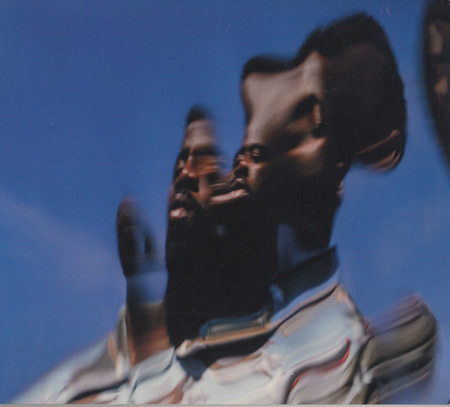
With Island Dreamer: III of III, Bahamian trumpeter and composer Giveton Gelin makes an ambitious statement about where he comes from, what he has inherited, and the kind of artist he intends to become. It is a record built around jazz, but its imagination stretches well beyond conventional jazz boundaries, drawing the Caribbean, personal memory, grief and resilience into the same musical narrative.
Born and raised in The Bahamas and later educated at Juilliard, Gelin has developed under the influence of musicians including Roy Hargrove and Wynton Marsalis while maintaining an explicit interest in tracing jazz back through its ancestry. The larger Island Dreamer project has been presented in The Bahamas as more than an album: the Central Bank of The Bahamas hosted an exhibition and world-premiere event incorporating photography, a songbook and Gelin’s work with young musicians through the Island Dreamer Academy.
https://www.instagram.com/giveton/?hl=en
https://www.facebook.com/givetongelinquintet/
The record is heavily concerned with living heritage, with “Blue Hole,” for example, being inspired by the famous underwater sinkholes of The Bahamas. Gelin uses trumpet and layered percussion to translate the idea of descending below the water’s surface into music. The vibrant “Moun Lakay” derives its title from the Haitian Creole associated with home and homeland, fitting naturally beside the album’s broader exploration of Gelin’s Haitian-Bahamian roots.
The emotional center may be “I Solemnly Swear to Live,” featuring virtuoso pianist Jon Batiste on piano. The arrangement stripped down to trumpet and piano alone, and Gelin has explained the piece as a deeply personal vow to live intentionally. Gelin’s treatment of Rihanna’s “Take a Bow” is equally riveting, taking a globally recognizable pop song and folding it into his own Caribbean story.
The album closes with “Fighting Spirit Blues,” which at 8:12, is perhaps the album’s most thematically developed piece. The number sustains its energy throughout the entire runtime, proving to be one of the more challenging performances on the record, and ending on a strong note.
Island Dreamer: III of III is a powerful declaration of identity. Its real subject is continuity between generations, islands, genres, sorrow and survival. Gelin does not simply pay tribute to his roots; he asks what those roots can grow into. It’s an unusually personal kind of contemporary jazz project in which virtuosity matters, but the story behind the notes matters just as much.
MICHAEL MOSS Presents ‘Quantum Butterfly’ On November 1, 2026
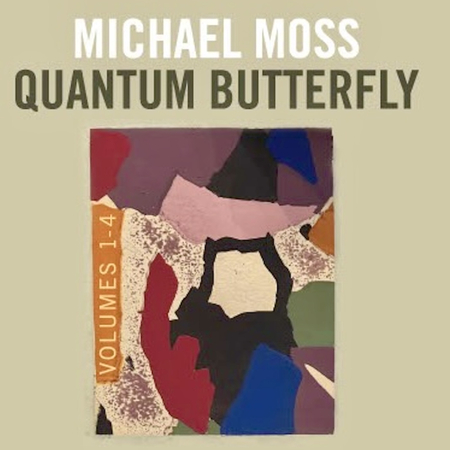
Michael Moss has spent decades treating jazz less as a fixed language than as a point of departure. On Quantum Butterfly, Moss expands his scope to a 4-volume anthology that runs more than four hours and brings together Moss’s ROOTS to SHOOTS ensemble, standards associated with some of modern jazz’s most important figures, and a substantial excursion into electroacoustic music.
What makes Quantum Butterfly compelling is that it doesn’t attempt to smooth those different strands into a single aesthetic. Instead, Moss allows them to coexist. His roots in hard bop, free jazz, modern classical composition and music from outside the American jazz tradition all remain audible as distinct forces.
The first volume, “ROOTS to SHOOTS,” establishes the collection’s most immediately accessible side. Chick Corea’s “La Fiesta” begins from an exuberant samba pulse, while Duke Ellington’s “Come Sunday” brings another easygoing connection to jazz history. But even here Moss refuses to remain comfortably inside straight-ahead jazz. “Amitabha” pushes soprano saxophone against odd meters, percussion and increasingly free improvisation.
Volume 2, “Ensemble Bows for Strings, Piano and Reeds,” makes the collection considerably more abstract. The 19-minute “Abyss” places Moss among strings and piano in music whose reference points extend toward Stravinsky, Shostakovich and the Third Stream. The conceptual heart arrives on Volume 3, “Quantum Butterfly”. “Samson’s
Walk” begins in a comparatively traditional setting, with Moss’s tenor stealing the spotlight. Meanwhile, “Freedom Chant” brings Afro-Cuban rhythmic energy and increasingly liberated interplay.
The fourth disc brings Moss back toward the jazz lineage with another “ROOTS to SHOOTS” performance, recorded at Westbeth in September 2025. Here the repertoire includes Bill Evans’ “TTTT” alongside Moss’s “March On,” leaning heavily into the themes of improving upon past perfomances.
If Quantum Butterfly has a potential obstacle, it is that there is a great deal of music here. Moving from swinging post-bop to electronic composition and everything in between within four hours demands more attention than the average jazz release. But that scale ultimately works because Moss himself supplies the through-line. Whether surrounded by strings, electronics, vibraphone or a hard-swinging rhythm section, his music remains driven by curiosity rather than stylistic loyalty.
https://michaelmoss.bandcamp.com/
OSCAR ROSSIGNOLI Presents ‘MAR ADENTRO” November 27, 2026

Honduran-born, New Orleans-based pianist Oscar Rossignoli brings several strands of his musical life into unusually convincing alignment with his latest release, “Mar Adentro.” Classical discipline, Latin rhythms, and modern jazz improvisation all coexist here without sounding like ingredients that have been consciously assembled.
This album marks an important change of format for Rossignoli. After the solitary exploration of “Inertia” and the completely improvised “Levitations,” Rossignoli surrounds himself here with bassist Lex Warshawsky and drummer Peter Varnado. One of his priorities was for the studio album to preserve the responsiveness and unpredictability of the trio in performance, and Mar Adentro plays out as a genuine three-way conversation rather than piano accompanied by rhythm section.
The opening “Gitanerías,” by Cuban composer Ernesto Lecuona, immediately establishes the record’s breadth. Rossignoli begins alone, taking on the piece’s demanding classical language before Warshawsky and Varnado enter and redirect the music toward contemporary jazz.
That transition leads naturally into the title track, the album’s emotional centre. The origins of “Mar Adentro” stretch back to a night Rossignoli spent working aboard a cruise ship. Unable to sleep, he encountered a grand piano at around three in the morning and began improvising. He recorded what emerged on his phone and later developed portions of that spontaneous performance into the composition.
That sense of memory continues through “Puñadito de Arena,” Rossignoli’s interpretation of Belisario Romero’s Honduran folk song. Its image of holding onto a handful of sand as a remembrance of something lost gives the album one of its strongest links to Rossignoli’s homeland.
The album becomes more rhythmically restless with “Ebbs and Flows,” a piece built around alternation between a gentle pulse and swinging passages. Then comes
“Serpent,” the album’s longest and most ambitious piece at over ten minutes. Conceived around a confrontation with evil, it gives the trio space to build something closer to a narrative tone poem. Warshawsky’s bass becomes particularly ominous as the composition twists through darker territory, but the piece eventually dissolves into an unexpected calm.
As an album, Mar Adentro feels like both a culmination and a departure point. Rossignoli is looking backward at Honduras and more than a decade immersed in New Orleans, while simultaneously moving toward a more personal conception of the jazz piano trio. The sea inside him is crowded with influences, memories and contradictions. The achievement of this album is that he finally allows them to move together.
https://www.instagram.com/oscar.rossignoli/
https://www.facebook.com/rossignolimusic/
Alex Otey Presents ‘Abbey Road Impressions’
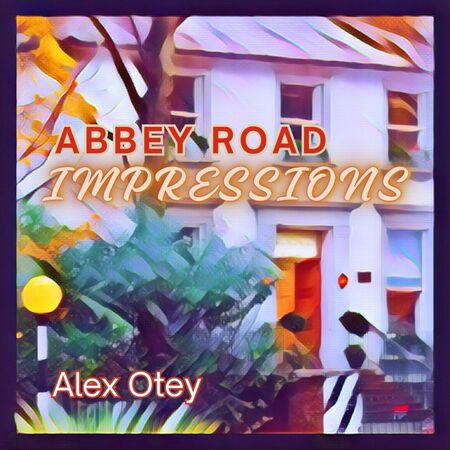
Few locations in popular music carry a cultural shadow as enormous as Abbey Road’s, but Alex Otey makes a bold move to explicitly draw inspiration from it with his latest album, “Abbey Road Impressions.” The risks of making this choice are obvious: an album explicitly inspired by the legendary London studios could easily become an exercise in nostalgia. But rather than attempting to recreate the Beatles, Otey treats Abbey Road as a starting point: a symbol of inspiration, memory and the enduring value of musicians actually playing together.
Released on August 1, 2026, the seven-track album emerged from a remarkably long gestation. Otey visited Abbey Road Studios in late 2019 while developing ideas for the project, only for his planned return to London to be disrupted by the pandemic. Work eventually resumed with assistance from Plaid Dog Recording in Boston, while the project finally came full circle when mastering was completed at Abbey Road in 2026.
The title track, “Abbey Road,” establishes the record’s central idea of inspiration. Instead of treating the studio merely as a landmark associated with famous records, Otey approaches it as a place where accumulated musical history can push another musician toward creating something of his own.
From there, each song represents another stage in a loose emotional journey. “World You Show Me” is an easygoing alt-rock number about stepping back long enough to notice both the beauty and complexity around us. “Yeah, We’re Going” shifts into motion with electric guitar solos and over-the-top vocal harmonies. Built around the idea of travel and anticipation, it brings some of the album’s most outgoing energy.
Musically, Abbey Road Impressions occupies a warm space between Americana, classic rock, blues and Otey’s jazz background. Acoustic piano is central, but the arrangements are hardly restrained. This is evident on the emotional center of the record: “Anna Lee.” Framed around love, tenderness and loss, the track introduces a more bittersweet dimension. The vocal textures take on a decidedly Beatles-like character as Otey’s broad musical vocabulary quietly expands the Americana framework.
Facebook: https://www.facebook.com/AlexOteyMusic/
X: https://www.twitter.com/AlexOtey/
Instagram: https://www.instagram.com/AlexOtey/
Artist Website: https://alexotey.com/
The album finds its resolution in “This Very Day.” Representing appreciation and awareness of the present, the finale brings the record’s emotional arc full circle. There is a deliberate simplicity to the album’s structure, and every song essentially arrives with an identifiable emotional role.
Abbey Road Impressions is an album that looks backward just long enough to understand how to move forward. It is concise, unpretentious and refreshingly human; a record inspired by one of music’s most famous addresses, but ultimately concerned with the much more universal roads people travel every day.
Camille K New Pop Single “Paradise,” Out NOW!

Camille K’s new single “Paradise” is an unabashedly bright piece of romantic pop, built around a simple but effective idea: paradise is all about who you escape there with. Released September 15, the song is all about the intoxicating early stages of a relationship, when ordinary responsibilities briefly seem insignificant. It is light, playful and deliberately uncomplicated; a track interested in capturing a feeling rather than dissecting it.
That simplicity is easily the song’s greatest strength. “Paradise” leans hard into its romanticism without trying to hide behind irony or an elaborate concept. Instead, Camille commits fully to the fantasy of disappearing with someone special and finding a private world together. It is familiar territory for pop music, and the warmth and energy of the track makes it accessible for most audiences. However, the sincerity of the premise keeps this single from becoming completely generic.
Musically, the song is framed by bright contemporary pop production, an upbeat rhythm and melodic vocals. Rather than surrounding Camille with an overly dense arrangement, the production appears designed to preserve the breezy, almost weightless quality of the song. Her vocal performance is consequently central to its personality: light and melodic rather than overly theatrical, matching the relaxed escapism at the heart of the lyrics.
There is also a nice sense of continuity developing in Camille’s recent songwriting. Her previous single “Something to Say” dealt with the uncertainty of admitting that a friendship might have become something more. “Paradise” effectively explores the honeymoon-like stage that follows. The nervous anticipation has disappeared, replaced by excitement and the desire to shut out the rest of the world. That connection makes the two songs feel almost like consecutive chapters and it’s not hard to imagine them appearing side by side on an upcoming album.
What gives “Paradise” its appeal is its lack of cynicism. There is something refreshing about hearing a pop song simply enjoy the possibility of being happy with another person. The polished production gives it playlist-friendly immediacy, but Camille’s vocal presence keeps the song from feeling completely manufactured. It feels particularly suited to late-summer drives, spontaneous trips and that brief period in a new relationship when even escaping nowhere in particular sounds exciting. Camille K is an artist becoming increasingly comfortable turning small emotional moments into accessible pop narratives and “Paradise” might be one of her most effortlessly inviting examples yet.
For more on Camille K, follow her on social media:
FOLLOW CAMILLE K:
Website | Instagram | Facebook | Spotify
UNLV Combos Present ‘Back Home’ by Joe Willams Combo & Latin Jazz Ensemble Out 11/1/2026

There is an easy trap for university jazz recordings, where technical proficiency becomes the entire point of their performance. “Back Home,” the new release from the University of Nevada, Las Vegas’ Joe Williams Jazz Scholarship Combo and Latin Jazz Ensemble, avoids that mistake entirely. Across fourteen tracks, the musicians craft a unique identity as performers, giving the record much more personality than the words “student ensemble” might suggest.
The album is essentially divided into two complementary halves. The opening eight pieces belong to the Joe Williams Jazz Scholarship Combo under Dave Loeb, while the final six expand into the more rhythmically colorful world of Pepe Jiménez’s Latin Jazz Ensemble. It is an unusually composition-heavy program, with original pieces by Andrés Montero, Tristan Selzler, Jason Knuckles, Skyy Estanislao and Josh Alvarado forming much of its identity.
https://unlvjazz.bandcamp.com/album/back-home
https://www.unlv.edu/music/jazz-ensemble
The Joe Williams Combo side establishes that identity immediately. Jason Knuckles’ “Pops ’N’ Ricky,” built around the familiar language of “When You’re Smiling,” has the kind of buoyancy that makes a natural opener. The title track, “Back Home,” brings the record into warmer and more personal territory. Composed by drummer Andrés Montero with lyrics by vocalist Eva Yazdanpanah and a soulful sax solo by Skyy Estanislao, it’s one of the record’s most inviting moments.
Some of the strongest material comes when the combo stretches beyond straightforward swing. Skyy Estanislao’s “Epifanio De Los Santos Avenue” introduces a warmer melodic character, but “Sam Hose” may be an even better example of what this ensemble does well. Knuckles writes a memorable jazz waltz that creates room for both his tenor playing and Selzler’s more expansive, McCoy Tyner-influenced piano vocabulary before easing into a quieter conclusion. The demanding arrangements across the album are played to perfection, supporting the idea that this is already a group of nature soloists that are now developing their artistic personalities.
Then Back Home changes complexion. The Latin Jazz Ensemble adds trumpets, a larger reed section, additional percussion and, crucially, Nathan Bastidas’ charango, immediately broadening the album’s palette. Josh Alvarado’s “Latin Ruins” is built around an appealing riff-based foundation, while “Tierra Mestiza” is particularly intriguing because the charango gives it a folk-derived identity that prevents the Latin side of the album from becoming too generic.
The appeal of Back Home is that it captures a group of young musicians at the stage where formidable technique is beginning to turn into individual musical identity. The Joe Williams Combo provides sophistication and intimacy; the Latin Jazz Ensemble supplies much of the color and communal energy. Together, they make an impressively varied record whose best moments suggest that several of these names will be worth following well beyond UNLV.
Dave Miles Presents ‘Unbelievable’
Taking on Bob Dylan is never an easy assignment, given that they already carry so much personality in their original recordings. With his rendition of “Unbelievable,” Dave Miles makes the difficult choice of pulling the song far enough into his own musical world to justify returning to it. The result is a rockstar cover that goes beyond imitation without losing sight of the original that inspired it.
Originally released on Dylan’s 1990 album Under the Red Sky, “Unbelievable” is one of the record’s tougher, more direct rock songs. It drives forward on repetition while Dylan piles absurdities, frustrations and social observations on top of one another. Even within an album often regarded as one of Dylan’s lighter releases, the song has attracted its defenders for its relentless momentum and wonderfully strange lyricism.
It is also a natural song for Miles to tackle, as he approaches the song through the rock-oriented identity he has been developing across his recent releases. His
interpretation places the focus on the immediacy of the song, giving it even more attitude rather than an elaborate melodic structure.
The lyrics still remain the real attraction as Dylan’s writing moves between observations about money, society and human behaviour, repeatedly returning to the idea that what is happening around us has become almost impossible to believe. More than three decades after the song was written, that central idea has hardly become less relevant. If anything, hearing another artist revisit “Unbelievable” in 2026 gives its bewilderment a new context.
https://artists.downersclub.com/dave-miles
There is also something refreshing about Miles choosing this Dylan song. “Unbelievable” is not one of the other standards that have been covered thousands of times. It comes from a period of Dylan’s career that remains divisive, and the choice to cover it shows us that Miles is getting comfortable within a classic singer-songwriter and rock framework.
As a cover, “Unbelievable” succeeds because it does not need to compete with Dylan. Instead, it functions as a salute to the songwriting that influenced Miles while fitting naturally into the straightforward, classic-rock-minded sound he has been building. For modern audiences, it offers an opportunity to revisit an overlooked corner of Dylan’s catalogue.
https://www.facebook.com/davemilesartist/
Nost Enter Presents ‘Untitled’

Magdeburg-based indie performer Nost Enter draws us deep into an atmosphere of mystery and suspense with their debut EP, “Untitled” At a time when bedroom production is falling victim to expensive plug-ins, immaculate presets and obsessively polished mixes, this record heads in the opposite direction.
Nost Enter says the record was created using a computer keyboard and free VST plug-ins, and that modest setup is an important part of understanding what makes the project interesting. Each track is titled simplistically, but “Untitled Pt. 1” demonstrates an underlying complexity with echoing wind sounds that intensify and blend into percussion as the track progresses.
Bandcamp link: https://nostenter.bandcamp.com/album/untitled
“Untitled Pt. 2” takes a different direction as it feels less concerned with demonstrating what its creator owns than with seeing how much can be extracted from very little.
The synths create a shimmering atmosphere while a steady drum beat takes the lead. There is a handmade quality to the record that makes its electronic foundations feel personal. Instead of attempting to hide the circumstances under which it was produced, Nost Enter seems comfortable allowing them to become part of the aesthetic.
That approach naturally gives the EP some rough edges. “Untitled Pt. 3” explores the use of a steady drone that alternates with a pulsating ambient treble sound. There are moments where a more sophisticated production setup could probably have added greater depth, but those little imperfections give the EP a sense of character.
As “Untitled Pt. 4” comes to a close, it’s clear why Nost Enter chose that title for their record. Calling the project Untitled removes almost every piece of framing that might otherwise tell listeners what they are supposed to hear. The emphasis falls instead on texture, arrangement and experimentation, giving the EP that exploratory character of someone treating production software as an instrument of its own. t
For such an obscure release, Untitled feels like an intriguing introduction to Nost Enter. It captures an artist testing boundaries, figuring out which instincts are worth following and discovering how limitations can become a recognizable sound. We are yet to see a definitive statement from this artist, but Nost Enter stands as a reminder that personality can matter considerably more than the price of the tools used to create it.
Dusty Edinger Presents ‘Beginning to Break’
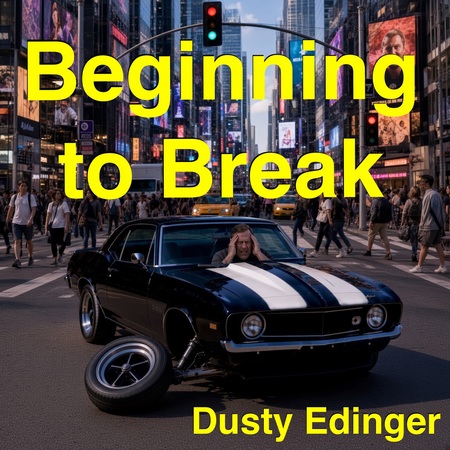
There is something particularly effective about a heartbreak song that refuses to sound defeated. On his new single “Beginning to Break,” Dusty Edinger takes the emotional exhaustion of watching a relationship deteriorate and sets it against a lively, guitar-driven rock arrangement.
The track wastes little time establishing its personality as the guitars arrive with purpose, built around a strong, memorable riff. The drums push the song forward with an almost restless momentum. The track feels active and urgent, as though the emotional collapse at its center has already gathered too much momentum to be stopped.
That contradiction between the upbeat tempo and downcast theme becomes the song’s greatest strength. The title tells you it’s all about that uncomfortable stage where cracks have become impossible to ignore, but some part of the relationship remains intact. The energetic instrumentation makes that uncertainty feel more immediate. Instead of looking back on heartbreak from a safe distance, you feel it happening in real time.
STREAMING:
https://open.spotify.com/track/1yEzOYKiHxeF44bq1dGaAL?si=f43c8bb5c23e4eb0
Edinger’s songwriting benefits from not overcomplicating that idea. His broader approach to lyrics has often involved mixing personal experience with enough ambiguity for listeners to find their own meaning in a song. “Beginning to Break” fits comfortably within that philosophy. Its emotional situation is recognizable without becoming so specific that the listener is kept at a distance.
If there is a limitation, it is also partly a consequence of the song’s accessibility. “Beginning to Break” does not appear interested in radically reinventing guitar-driven rock. Its pleasures are more traditional: a strong central riff, punchy rhythm section, memorable melodic construction and an emotional premise listeners can immediately understand. But that familiarity works because Edinger commits to it rather than dressing the song up unnecessarily.
With this single, Edinger recognizes that emotional breaking points are not always quiet moments of surrender; sometimes they arrive with frustration, adrenaline and the desperate urge to keep moving even when something important is falling apart behind you. Endinger reminds us that he’s an artist that knows his style and has perfected it.
ONLINE:
https://www.dustyedinger.com/
https://www.instagram.com/dusty_edinger
https://www.facebook.com/dusty.edinger.2025
https://www.youtube.com/@dustyedingermusic
